

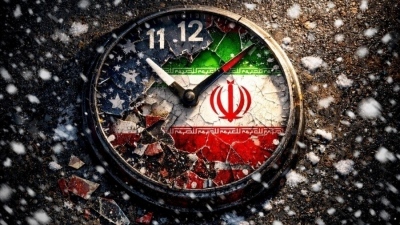
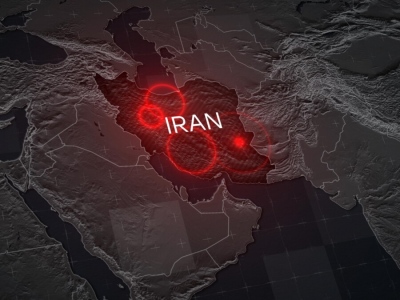
In a move amounting to a geopolitical "earthquake," Tehran is transforming the Strait of Hormuz into a monetary warzone, imposing de facto tolls denominated in Chinese yuan. Thus, while US President Donald Trump attempted to strangle the Iranian economy, the regime is responding with strategic "trolling" that strikes at the heart of American power: the petrodollar sovereignty.
With China waiting in the wings and international energy markets in turmoil, Washington faces a humiliating defeat in the world's most critical maritime passage. This comes at a time when Trump had promised—at least during his campaign—to downgrade China's influence, hence the trade war triggered by tariffs.
Iran's new practices at Hormuz
Lloyd’s List Intelligence has published an analysis highlighting Iran's latest tactics in the Strait. It describes how vessels are required to provide cargo manifests, crew details, and destinations to the paramilitary forces of Iran’s Revolutionary Guards. This information is transmitted to the Guards' "Hormozgan Provincial Administration" for sanctions screening, cargo alignment checks—which currently prioritize oil over all other commodities—and for what is described as "geopolitical vetting," according to Lloyd’s List. "While not all ships pay direct tolls, at least two vessels have done so, and the payment was settled in yuan," Lloyd’s List notes.
The epic "trolling"
With the Strait of Hormuz effectively blockaded and Trump experiencing nightmares (especially ahead of the midterm elections) over skyrocketing gasoline prices, Iran has begun its "trolling." This is particularly evident in Tehran’s plan to elevate the Chinese yuan, requiring all tankers passing through Hormuz to settle transactions in the Chinese currency. It is enough to ruin Trump’s week—and that says a lot, considering the many ways the US-Israeli offensive against Iran has gone awry.
Beyond the debacle suffered by the US and Trump personally in the Middle East, the involvement of the yuan could put "Trump's world" in a difficult position. Even assuming Iran would consider allowing US-bound tankers to pass through the Strait, the requirement for payment in yuan would constitute a significant diplomatic retreat. Among the reasons Trump was re-elected was his promise to "downgrade" China, which is why he initiated the trade war through the imposition of tariffs.
The rise of the "petro-yuan"
Inadvertently, however, Trump is making the idea of a "petro-yuan" great again. Kashif Hasan Khan, an economist at Paragon University in Cambodia, notes that reports suggesting Tehran may set oil trade in yuan as a prerequisite for tanker passage should be viewed less as a technical payment proposal and more as a geopolitical signal. As he writes in an opinion piece for the Asia Times, "it would represent a deliberate attempt to merge military geography with monetary strategy."
Khan argues that Iran has at least three motives for demanding yuan: First, the evasion of sanctions. Second, to do a "favor" for China to remain in Xi Jinping's good graces. Third, to challenge the dominance of the petrodollar.
Two parallel wars
The Economist puts it aptly this week, arguing that "the conflict plaguing the Middle East can be best understood as two parallel wars. One is the campaign of US and Israeli airstrikes against the Iranian regime, and the other is Iran’s waragainst the global economy." If Trump fails to address both simultaneously and successfully, says Frederick Kempe, CEO of the Atlantic Council, "he risks turning what has so far been a tactical military success into a strategic failure with long-term consequences for international stability." The first war is one of missiles, drones, and the targeting of Iranian leaders by Israel, which is now entering its fourth week. "This brings us to the second conflict unfolding in shipping lanes, energy markets, and among political leaders," Kempe notes.
Deutsche Bank's analysis of the petro-yuan
In this context, reports that ship passage through the Strait of Hormuz may be permitted in exchange for yuan paymentsshould be monitored closely, Deutsche Bank notes. It adds that the conflict could be remembered as a critical catalyst for the erosion of petrodollar dominance and the birth of the petro-yuan. A greater risk may arise if the world begins to shift away from globally traded oil and gas toward more resilient energy sources, such as domestically available fuels, renewables, and nuclear power. The energy choices of the Global South, Europe, and North Asia will be decisive. A shift away from oil could be just as potent as the push for alternative currency pricing.
A world that becomes more self-sufficient in defense and energy could also be a world that holds fewer dollar reserves, Deutsche Bank concludes.
www.bankingnews.gr







Σχόλια αναγνωστών